

I encourage all of you to think about your funeral transport. If you have a copy of my book, My Life, My Death, My Wishes, you’ll have seen a whole chapter on it and some of the alternatives available.
When we don’t pre-plan for our end of life, and have conversations with the people that matter to us, especially those responsible for organising our funeral, then what is chosen may be done from an emotional and reactive place, simply agreeing with the traditional suggestion from the Funeral Director. I’m talking about a big black limo-style hearse and maybe even a second big black limo for family to travel in following the deceased.
When you have taken time to consider your person, you might choose a different option, because there are loads available, from horse and carriage, to motorcycle hearses, converted HGV’s, and Morris Minors. The type of vehicle that might represent yours/your persons passions and personality. There’s even multicoloured hearses. In this blog I’m going to focus on lower‑impact funeral transport: Greener Ways to Make the Final Journey
I will though, briefly mention costs. Starting with the baseline, standard hearse hire, which ranges from c£250-£650 depending on distance with an additional car costing c£250.
Greener Ways to Make Your Final Journey
Electric Hearses
Traditional hearses are iconic, but they’re also fuel‑heavy vehicles. Today, more funeral directors are offering electric hearses, which provide the same dignity and presence without the emissions. They’re quiet, elegant, and surprisingly moving in their simplicity.
Walking Funerals: Slow, Human, and Deeply Moving
I think the most impactful funeral I ever attended was a walking funeral. Obviously this is only possible if you are close to the graveyard or crematorium. Living here in rural mid Wales would certainly involve some sort of transportation without a lot of planning for a quick burial, keeping your person at home and having a local burial spot! But in the case of my friends son, the feeling was profound. the entire town stopped to be respectful as the large congregation followed the deceased on foot from the chapel of rest to the graveyard, through the high street, as he was carried by members of his local gym.
It really is one of the most beautiful low‑impact options with the coffin carried or wheeled through the village or along a short route, with family and friends walking behind.
Walking funerals:
- reduce vehicle use
- create a sense of community
- slow the pace of the day
- allow people to feel connected to the moment
There’s something profoundly grounding about walking together, step by step, accompanying someone on their final journey.
Horse‑Drawn Carriages: Romantic, But Not Always Eco‑Friendly

Horse‑drawn hearses are often seen as traditional or elegant, but they’re not always the most sustainable choice, especially if the horses have to be transported a long way to be used. However, they can be meaningful for certain families, especially those with farming or equestrian backgrounds, but they require careful consideration. If chosen thoughtfully — with local stables, short distances, and well‑cared‑for horses — they can offer a gentle, low‑impact option. Although they are certainly not the cheapest option , often exceeding £1000
Reducing the Number of Cars
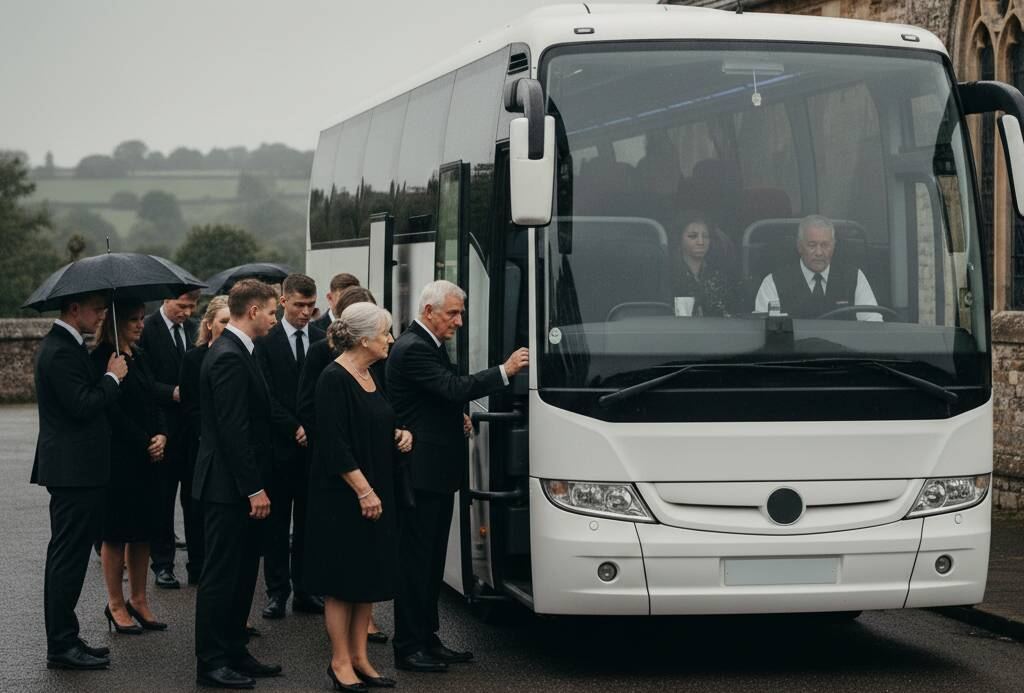 Even if the hearse itself isn’t changed, the rest of the procession can be made greener.
Families can:
- encourage car‑sharing
- arrange minibuses for groups
- choose venues close together
- invite guests to walk between locations where possible
These small shifts reduce emissions and create a more connected, communal feel.
Celebrating Close to Home
Another way to reduce transport impact is to hold the funeral or celebration of life close to where the person lived. In my local area the local crematorium is at least 35 miles away, think of the number of vehicles travelling there and back for the 20-40 minute service. Thats why I’m a keen to get families thinking outside that traditional box, bring your deceased to somewhere close to home or even home(!) and gather everyone there for the service. Think community halls, gardens, rugby club, public house. You can then have the wake in the same place and instead of closing curtains and all leaving for a drive to another place for a drink and a sandwich, you can wave your person off and start sharing stories , and hugs in the place you already are. A place that holds meaning to your person.
This often makes the day feel more intimate and grounded — less about logistics, more about love.
Your Own Vehicle
As an extra, I’ll just point out that you don’t need to use a hearse or alternative at all, you can use your own vehicle. I did a service once for a farmer who had specified she wanted to travel in her favourite horse box. So we founds a way to hold her in position for the journey and then opened up the back doors and centred her for the slow crawl to the final reasting place. Not necessarily greener, but certainly less costly.
Why Low‑Impact Transport Matters
Choosing low‑impact transport isn’t just about ticking environmental boxes. It’s about intention and aligning the farewell with the values of the person who has died — especially if they cared about nature, simplicity, or sustainability.
It’s also about atmosphere. A quieter hearse, a shared walk, a familiar vehicle… these choices change the tone of the day. They make it feel more human, more connected, more reflective.
Funerals don’t have to be grand or traditional to be meaningful.
Sometimes the simplest choices — the ones that tread lightly on the earth — are the ones that stay with us the longest.


